Updated: July 2026
The Ultimate Maumere to Komodo Route Guide for Luxury Travelers
- It allows for a gradual, east-to-west exploration of Flores’ diverse cultural and natural landscapes.
- Key highlights include the tri-colored volcanic lakes of Kelimutu, the traditional villages of Bajawa, and the spiderweb rice fields of Ruteng.
- The trip culminates with a private phinisi cruise through the Komodo archipelago to encounter the famed dragons and pristine marine life.
An Editor’s Dispatch from the Edge of the World
The air in Maumere hangs thick with the scent of cloves and salt. From the window of our private vehicle, the silhouette of Mount Egon pierces a sky just beginning to blush with dawn. This is not the frenetic energy of Bali or the crowded docks of Labuan Bajo. This is Flores, unscripted. The journey from east to west across this remarkable island is less a vacation and more an expedition—a slow, deliberate immersion into one of the last truly wild frontiers of luxury travel. As a senior editor for Departures, I’ve seen countless itineraries promising “off-the-beaten-path” experiences. The Maumere to Komodo route, however, is one of the few that genuinely delivers, trading tourist thoroughfares for a narrative of discovery that unfolds one volcanic vista at a time. It’s a route that demands patience and rewards it with profound encounters, both with the land and its people. This is the definitive guide to navigating it with the comfort, exclusivity, and insider access that defines a modern luxury voyage.
Why Maumere? The Strategic Advantage of the Eastern Gate
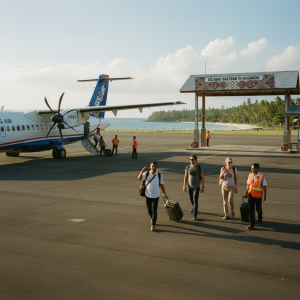
The conventional approach to Flores is to fly into Labuan Bajo (LBJ) on the western tip, take a boat to Komodo, and perhaps venture a short way inland. This is a mistake. By starting in Maumere, you reverse the flow, effectively putting the entire island between you and the crowds. Beginning in Maumere is a strategic masterstroke: you travel with the sun at your back, watching the island’s culture unfold from its animist roots in the east to the more developed west — a far more logical and rewarding progression. Maumere’s Fransiskus Xaverius Seda Airport (MOF) is well-connected, with daily 90-minute flights from Denpasar, Bali. Upon arrival, the pace immediately decelerates. We spent our first day exploring the Sikka district, home to some of Indonesia’s most intricate and culturally significant ikat weaving. Here, master weavers work on backstrap looms, a process that can take up to a year for a single ceremonial piece. Opting for the maumere flores starting point isn’t just about avoiding congestion; it’s about context. You gain an appreciation for the island’s depth before reaching its famous finale, transforming the journey from a simple destination trip into a rich, cross-island odyssey. This approach allows for a deeper connection and a more exclusive experience, setting the tone for the entire adventure.
Kelimutu’s Tri-Colored Lakes: A Geothermal Dawn
The drive from Maumere to the mountain village of Moni, the base for exploring Kelimutu National Park, is a 95-kilometer journey that takes approximately four hours. It’s a serpentine route that climbs through villages and forests, a prelude to one of Indonesia’s most surreal natural phenomena. The true experience begins before dawn, with a 4:00 AM departure to reach the volcano’s summit for sunrise. The final ascent is a manageable 20-minute walk to the main viewpoint, 1,639 meters above sea level. As the first light spills across the caldera, it illuminates the three crater lakes, each a different, otherworldly color. I spoke with a local geologist who explained that the dramatic hues—ranging from turquoise and emerald to deep black or maroon—are the result of chemical reactions from volcanic minerals dissolving in the water. The colors are unstable and can change over a matter of months. The westernmost lake, Tiwu Ata Mbupu (Lake of Old People), is typically black, while the adjacent Tiwu Nuwa Muri Koo Fai (Lake of Young Men and Maidens) and Tiwu Ata Polo (Bewitched Lake) shift between shades of green and blue. The experience is both geological wonder and spiritual touchstone for the local Lio people. Planning this visit requires precision; understanding the best time for Maumere Flores voyages is essential, as the dry season from May to September offers the highest probability of clear skies for this essential morning ritual.
Central Flores: Megaliths, Marine Sanctuaries, and Mountain Air
The heart of Flores presents a choice, the island’s diverse character. From Moni, the Trans-Flores Highway winds west toward the highlands of Bajawa. However, a compelling detour leads north to the coast and the Riung 17 Islands National Park. This archipelago is a pristine marine sanctuary, best explored via a private chartered boat. We spent a day snorkeling over vibrant coral gardens and picnicking on a deserted white-sand island. The day’s highlight was mooring near Pulau Ontoloe at dusk to witness tens of thousands of giant fruit bats (flying foxes) emerge, their massive wingspans silhouetted against the sunset. This detour adds at least a full day to the itinerary but is an unmissable experience for marine life enthusiasts. Continuing to Bajawa, the climate shifts dramatically. At an elevation of 1,100 meters, the air is cool and crisp. This region is the heartland of the Ngada people, and its primary draw is Bena, a 1,200-year-old megalithic village. Stone altars (ngadhu and bhaga) representing male and female ancestors stand at the center of rows of traditional thatched-roof houses. As noted by Indonesia’s official tourism board, Bena offers a direct window into the island’s ancient animist beliefs. Our team can help customize your Maumere Flores voyages to perfectly balance these coastal and highland experiences, ensuring your journey reflects your personal interests.
The Spiderweb Rice Paddies of Ruteng: A Communal Canvas
The 135-kilometer drive from Bajawa to Ruteng is arguably the most scenic leg of the overland journey, a four-to-five-hour passage through a landscape of staggering beauty. Ruteng itself, the capital of the Manggarai regency, is a cool, often misty town set at 1,200 meters. But the true masterpiece lies just outside the town of Cancar: the Lingko rice fields. From a high vantage point, these fields reveal a pattern unlike any other on Earth—a colossal spiderweb etched into the landscape. This is not for aesthetics; it is the physical manifestation of a centuries-old system of communal land distribution known as lodok. A central point is established, and from there, lines are drawn outwards to divide the land into triangular plots, ensuring each family receives a fair share of the fertile ground. The Lingko fields are a living monument to the Manggarai philosophy of unity and shared resources, the spiderweb layout a powerful symbol of interconnectedness. Observing this agrarian marvel, you realize you are looking at more than just agriculture; you are seeing a social contract made visible. It’s a quiet, profound stop that deepens one’s understanding of the island’s cultural fabric before the final push to the coast.
From Labuan Bajo to a Private Phinisi: The Komodo Transition
After days of traversing Flores’ rugged interior, the arrival in Labuan Bajo feels like re-entering a different world. This once-sleepy fishing village has transformed into a bustling hub, its harbor now filled with the masts of phinisi schooners and luxury yachts. For travelers on the Maumere to Komodo route, Labuan Bajo is not the destination but the launchpad. Here, we trade our land vehicle for a vessel that will be our private floating villa for the next several days. The phinisi is a traditional two-masted Indonesian sailing ship, and the modern luxury versions are marvels of craftsmanship, featuring air-conditioned cabins with ensuite bathrooms, sundecks, and a full crew including a private chef. The transition from land to sea is seamless. The booking process for a top-tier phinisi is intricate, involving matching the vessel’s size, style, and crew to the client’s expectations. Once aboard, the true prize comes into view: the jagged, arid islands of Komodo National Park. This UNESCO World Heritage site, established in 1980, encompasses 29 volcanic islands and protects a staggering biodiversity, including its most famous resident. The overland journey has built the anticipation; the sea voyage is the sublime reward.
The Komodo Archipelago: Dragons, Pink Sands, and Manta Rays
A private charter in the Komodo archipelago is the pinnacle of experiential travel. Your captain and guide create a fluid itinerary based on tides, weather, and your interests. The first order of business is, of course, the dragons. We made landfall on Rinca Island, often considered a better viewing location than the larger Komodo Island due to its denser dragon population of over 1,300 individuals. Led by a seasoned park ranger, we safely observed several of these prehistoric behemoths, which can grow up to 3 meters in length. The next day was dedicated to the park’s iconic topography. A morning trek up Padar Island yielded the famous panorama of three distinct bays, each with a different colored sand—white, black, and pink. Later, we anchored at Pantai Merah, the Pink Beach, its remarkable hue derived from the crushed red organ pipe coral mixed with the white sand. But the magic of Komodo extends beneath the waves. At Manta Point, we snorkeled alongside more than a dozen giant oceanic manta rays, some with wingspans exceeding 5 meters, as they glided effortlessly through the current. Our commitment to safety and trust is paramount in these activities, with expert dive masters and marine guides accompanying every aquatic excursion, ensuring both guest security and responsible interaction with the wildlife.
Quick FAQ: Navigating Your Maumere to Komodo Journey
How long does the full Maumere to Komodo route take?
For a comfortable luxury experience, we strongly recommend a 10 to 14-day itinerary. This allows for a relaxed 6 to 8 days overland to fully absorb the culture and landscapes, followed by a 3 or 4-night private phinisi cruise to explore the Komodo archipelago without rushing.
What is the primary mode of transport overland?
A private, air-conditioned vehicle (typically a Toyota Innova or similar SUV) with a dedicated, experienced English-speaking driver and a separate guide is non-negotiable. The Trans-Flores Highway is winding and challenging, and expert local knowledge is essential for both safety and accessing unique, un-marked points of interest.
Is this trip physically demanding?
The journey can be tailored to various fitness levels. The pre-dawn hike at Kelimutu and the trek on Padar Island are of moderate difficulty but relatively short (30-45 minutes of climbing). All hikes are optional, and the itinerary can be adjusted to focus more on cultural immersion, relaxation, or marine activities depending on your preference.
What should I pack for a trip like this?
Versatility is key. You’ll need light layers for the cool highlands of Bajawa and Ruteng, lightweight and breathable clothing for the coast, multiple swimsuits for the boat, and sturdy, comfortable walking shoes for hikes and village visits. Our comprehensive Maumere Flores Voyages Packing Guide provides a detailed checklist for this specific route.
The Maumere to Komodo route is not a checklist of sights but a continuous, unfolding narrative. It is an investment in time that pays dividends in authenticity and solitude. By starting in the east, you don’t just see Flores; you experience its evolution, its textures, and its soul. This is the island as it is meant to be seen—slowly, thoughtfully, and with a sense of profound discovery. This is more than a vacation; it’s a story you will tell for years. Begin crafting your Flores epic. Explore our signature maumere flores journeys and let us chart your course across this extraordinary island.